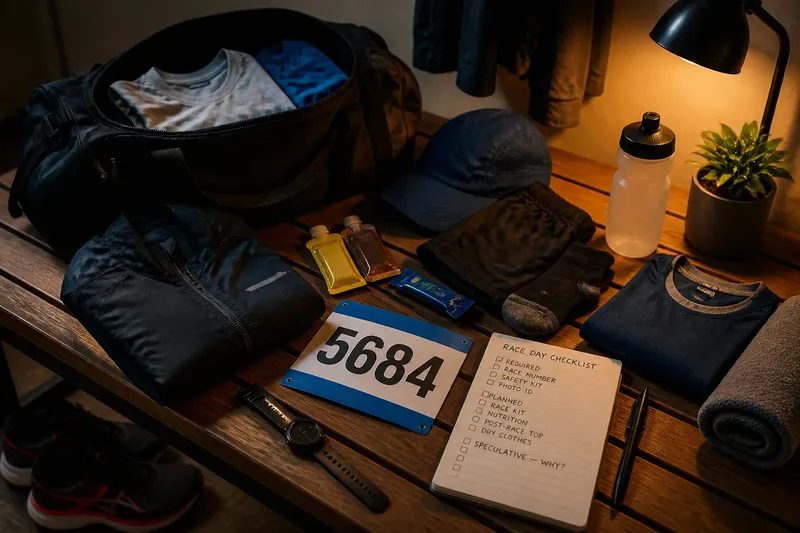
Pins, Clips or a Number Belt? Three Ways to Wear a Race Number
Compare race number pins, clips and belts by convenience and garment impact, then choose an attachment that suits your kit and keeps the bib clearly visible.
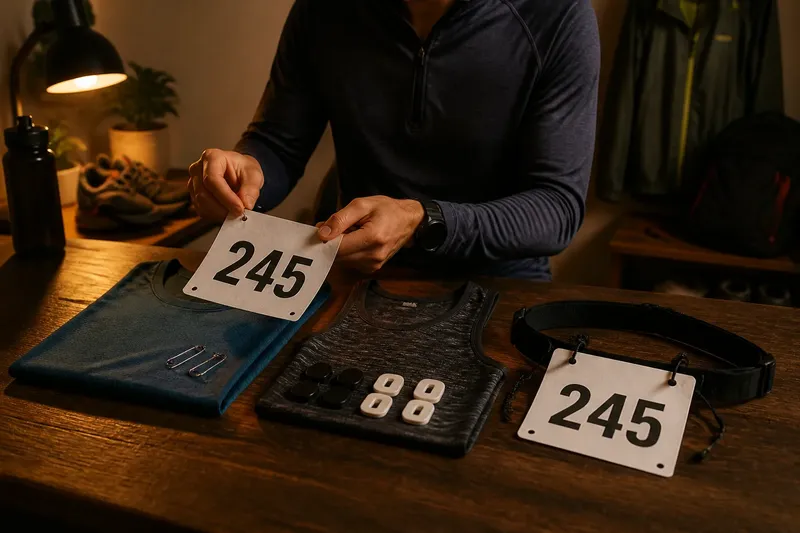
Choose race number pins, clips or a belt to suit the garment you will actually wear, not an idealised race outfit. Pins work well on sturdy fabric, clips avoid pinholes, and a belt keeps the bib off your top; check the event’s display rules before deciding.
Pins, clips and belts attach the bib in different ways
Safety pins pass through the number and fabric, holding the bib directly against a shirt, vest or jacket. They are familiar and easy to carry, but leave punctures and can snag delicate material if handled carelessly.
Race-number clips grip the bib and garment without piercing the cloth. Designs vary: some use a backing piece on the inside, while others fasten with magnets or another non-piercing mechanism. Check that the particular style fits both the bib and the thickness of your clothing.
A number belt holds the bib on a separate elastic or adjustable band around your waist. The number attaches to the belt, usually with toggles or clips, rather than to your top. This leaves the garment unpierced, but adds an item to wear and adjust.
All three methods aim to keep the number visible. Pins make a direct attachment, clips create a removable one, and a belt moves the attachment point away from the garment. Like choosing between a button, a clip and a separate hook, the best option depends on what you need to fasten and where.
Match the attachment to your race clothing
Start with the fabric and construction of the garment you plan to race in. A robust cotton event shirt or an older training top can usually take pins more readily than a fine technical vest, lightweight shell or fabric with a delicate finish. If you want to avoid holes, favour clips or a belt.
Consider seams, pockets and layers as well as fabric. A bib placed over a zipped jacket may cover the zip pull or catch on a pocket opening. A belt can offer more freedom to position it, provided the number remains plainly visible; on a vest, check that the attachment does not sit over a strap or a pocket you intend to use.
Think about clothing you may remove during the event. A bib fixed only to an outer layer will go with it. Attach the number to a stable base layer or use a belt over the layer you expect to keep, if the event permits that position.
Imagine you plan to wear a thin technical vest beneath a light jacket, and you expect to remove the jacket later. You want to avoid puncturing the vest and keep the number visible, so you choose a belt worn over the vest after confirming that placement is allowed. The result to check is that the bib stays with the clothing you keep on, rather than disappearing with the jacket.
Check for fabric damage and a secure fit
Pins leave punctures, so they are not the best choice if preserving a particular garment matters to you. On sturdy fabric, the marks may be an acceptable trade-off; on delicate or tightly woven material, piercing can leave visible holes or catch fibres. Avoid placing a pin through a seam, elastic panel or waterproof layer.
If you use pins, attach them through the bib and a sound area of fabric, keeping the sharp points clear of skin. Avoid folds that could bunch or pull, and use the number’s intended attachment area where one is provided. Remove the pins carefully after the event rather than dragging them through the cloth.
Clips avoid pinholes, but they can still press against the garment or snag some fabrics. A belt avoids direct attachment to the top, although its band can rub or shift if poorly adjusted. Try your chosen method with the exact clothing you intend to wear; “no holes” does not automatically mean “no garment contact”.
For a valuable or fragile garment, check its care guidance before trying an attachment on a less visible area. If the guidance does not permit that, use a belt or a suitable non-piercing clip and check that it holds the bib securely without catching the cloth.
Choose convenience without sacrificing visibility
Clips can suit you if you want to remove the bib without leaving holes, particularly when you use the same race garment repeatedly. They may also make it easier to reposition a number before the event. Their convenience depends on the design: small pieces can be fiddly, and not every clip suits every bib or fabric thickness.
Pins are simple to understand and do not require a special belt or clip set. They are a useful choice when your clothing is sturdy and you are content to pierce it. The trade-off is handling sharp pieces and taking care not to twist the fabric or fasten the number unevenly.
A belt can keep the bib visible if it holds the number in the position required by the event and the bib faces outwards. It will not help if the number sits under a jacket, folds over or lands where a pocket or arm repeatedly covers it.
Try the method at home rather than making the first attempt in a crowded start area. Put on the full outfit, attach the bib, move naturally and check that the number remains flat and visible. Inspect whether pins or clips pull the fabric, or whether the belt shifts as you move.
Check these details before race day
Lay out the exact clothing you plan to wear, the race number and your chosen attachment. Check each point below; if a check fails, use the alternative action before deciding the setup is ready.
- Event rules: Check the organiser’s instructions for number position and display. If your method meets them, keep it; if not, change the position or attachment method to comply.
- Fabric condition: Check whether the chosen area is sturdy and whether punctures are acceptable. If it is sound and you accept pinholes, pins are an option; if it is delicate or must stay intact, use a suitable clip or belt instead.
- Garment layers: Check which layer will stay on during the event. If the bib is attached to that layer, retain the setup; if it is on a jacket you may remove, move it to a stable layer or use a belt.
- Clear placement: Check that seams, zips and pockets do not obstruct the bib. If the front remains clear, keep the position; if not, reposition it or see whether a belt offers a permitted clear spot.
- Attachment fit: Check that clips suit the bib and fabric thickness, or that pins close securely. If the attachment holds without pulling cloth, proceed; if it slips or snags, switch to a better-fitting method.
- Movement: Check the setup while walking, jogging and bending in your full outfit. If the number stays flat and visible without rubbing or restricting you, keep it; if it shifts or catches, adjust it or choose another attachment.
Say you have a delicate vest, a light jacket you may remove, a bib, a belt and event instructions requiring the number to remain visible on the front. First, you check that the belt is allowed and position it over the vest; next, you put on the jacket and confirm that the bib remains unobstructed. Then you walk, jog and bend, finding in this invented situation that the belt shifts when the jacket comes off. You tighten and reposition it, repeat the movements, and see that the number now stays flat and visible; if it still shifted, the alternative would be a suitable clip on the stable vest area, provided the instructions allow it and the clip fits without snagging.
Use the checks to narrow your choice, not as a reason to buy equipment you do not need. If your pins suit a durable shirt and follow the event’s rules, there may be no advantage in adding clips or a belt. If keeping a fragile top intact matters more, a removable option may be the better race number attachment.
What should I check about race number attachments?
Can I wear my number on a belt?
Often, but the event may specify a required position or display method. Check its instructions, then make sure the belt holds the bib facing outwards and unobstructed.
Can I use ordinary safety pins?
Ordinary safety pins can work when the event permits them and the fabric can take punctures. Use pins that close securely, and keep their points away from skin and fragile panels.
Do clips fit every race number?
No single clip design suits every bib and garment. Check the maker’s fit guidance and try the clips with your actual number and clothing before the event.
Should I attach the number to my jacket?
Only if you expect to keep that jacket on and the placement follows the event’s rules. If you may remove it, choose a stable layer or a belt instead.
Make the decision while laying out the clothing you truly plan to wear, then check the bib once more after putting the outfit on. A number that stays flat, visible and secure is easier to forget about when the start is near.