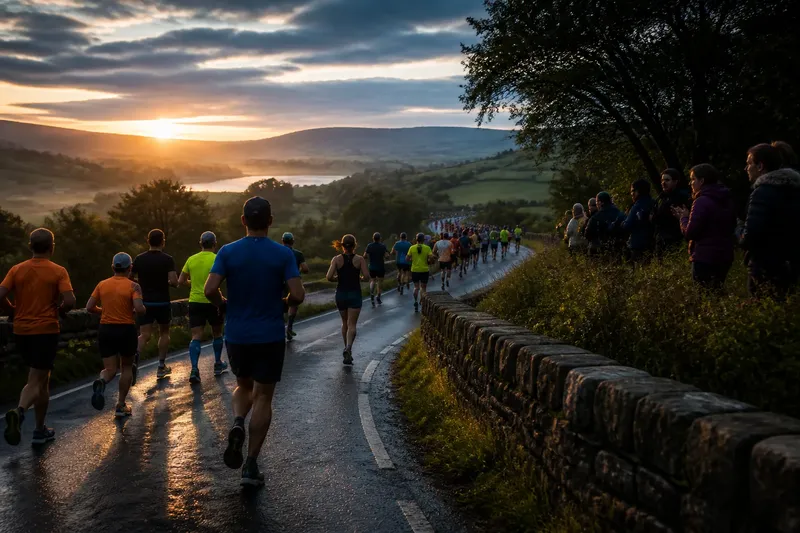
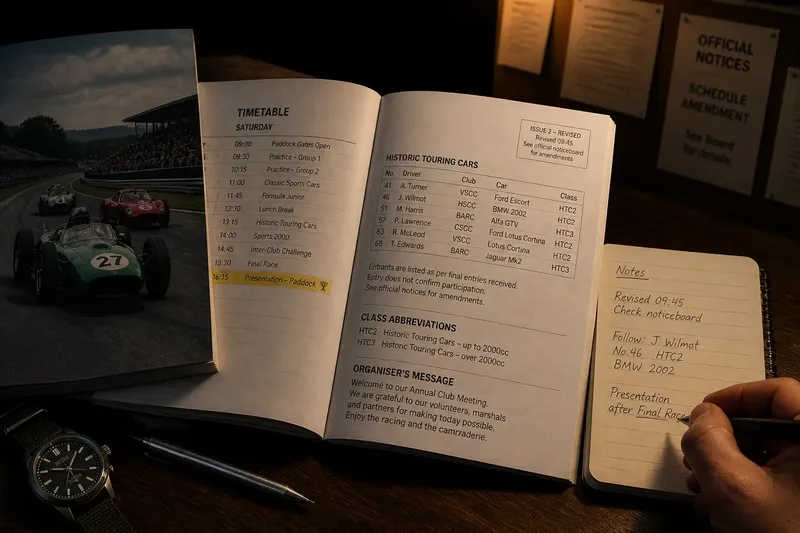
Your First Day Watching a Race: Choose a Viewpoint
Choose a race-watching viewpoint that suits the course, then follow changing sightlines and race context without chasing every moment or missing the action.
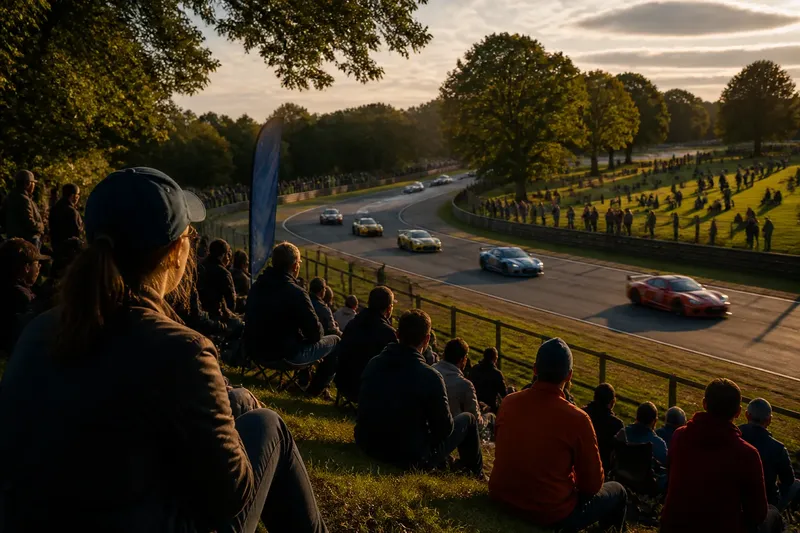
Choose your race-watching viewpoint before the start, and you will follow the action more easily than if you keep searching for a better angle. Look for one place that reveals a specific part of the course, gives you a clear sightline and lets you stay within the event’s spectator rules.
Say you are attending an invented town circuit race. The course passes a broad start area, winds through a tree-lined bend and returns along a straight beside a public viewing field. You have arrived early, have no special access and want to watch the race rather than spend the day looking for another spot. Begin with the map, then check what each permitted area actually shows.
Choose a viewpoint that reveals the action
A start line shows the field setting off and the first movement. A bend can reveal how competitors position themselves and how the group stretches, while a straight gives you time to follow changing gaps. The finish offers the clearest view of the arrival and immediate reactions.
These views are like seats around a table: each gives you a different angle on the same conversation. At the invented circuit, the start field offers a broad view but little of the course’s shape. The bend shows competitors entering and leaving a turn; the straight makes their movement towards the finish easier to follow.
Choose the feature you most want to understand. If you are curious about how the course affects the race, look for a visible change in direction, surface or width. If you mainly want to recognise competitors as they pass, favour an unobstructed approach where you can see them coming.
Check that you can see more than the nearest edge of the course. A fence, banner, marshal post or crowd may block part of the view. A sightline that includes the approach and exit helps you interpret a pass rather than seeing only a brief flash of movement.
Compare the map with the spectator view
A course map marks the route, but it cannot show every obstruction at your eye level. Once you arrive, notice where the course disappears behind trees or buildings, where the surface changes, and where barriers define the viewing area. Follow signs and marshals’ directions, and keep paths and access routes clear.
At the invented bend, you can see competitors approach through a gap in the trees, but the exit is hidden. That position suits you if you want to watch how the field enters the turn. If you want to see who emerges in front, look for a permitted spot with a view of both sides.
Announcements can add context about a group or an incident beyond your sightline. Treat them as a guide to where to look, not a replacement for what you can see; sound may be difficult to hear, and other spectators may react before you know why.
Check whether a convenient spot is beside a path where foot traffic will interrupt your view. If the event has marked viewing zones, choose one that fits the action you want to watch and leaves access routes unobstructed.
Settle in and learn your sightline
Once you have chosen a spot, note where competitors first appear, how long they remain visible and where they disappear. Use a clear landmark—a flag, a building corner or a painted line—to anchor your attention.
In the invented circuit, you settle beside the public field with a view of the straight and part of the bend. A blue course banner marks where competitors come into sight. You can follow them towards the turn and watch those who emerge onto the straight; the banner gives you a reliable visual cue for the next pass.
Keep your position comfortable without blocking someone else’s view. Sit only where permitted, avoid leaning over barriers and do not step into the course to improve your angle. If you need a small adjustment, move within the designated viewing area.
Before the race, check the event’s spectator information for closed paths, crossing restrictions and permitted routes between viewing areas. If a route is open and movement is allowed, you can consider moving during a lull. If not, stay put and follow the race from your current sightline.
Use a clear rule to decide whether to move
Stay when your current spot shows the part of the race you care about and the route elsewhere is closed, unclear or likely to obstruct others. Move only when the event permits it, the route is open and the next useful view is worth leaving your current one. If you cannot confirm all three, staying is the safer choice.
Use these checks before changing position:
- Check the event map for an open route; if it is marked closed or unclear, stay in your viewing area, otherwise follow the signed route.
- Check for marshals’ instructions at the path; if they direct spectators to remain, stay, otherwise continue only along the permitted route.
- Check whether the next pass is approaching your position; if it is, stay and watch, otherwise consider moving during the lull.
- Check whether the new spot shows an action you cannot see now; if it does not, keep your current view, otherwise weigh the improvement against what you will miss.
- Check whether your move would cross the course or obstruct a path; if it would, do not move, otherwise use the clear spectator route.
- Check whether the new sightline includes the approach and exit; if it does not, your current spot may be more useful, otherwise move only if the route is permitted.
What should you choose when the view is limited?
Should you choose the start or the finish?
Choose the start if seeing the field set off matters most; choose the finish if you want to watch the arrival and immediate reactions. If you have one position, decide which moment matters more and check whether the event allows safe movement between areas.
Where should you stand to understand a bend?
Look for a permitted position where you can see competitors approach and, if possible, leave the turn. The approach shows how they enter; the exit helps you follow the order and spacing afterwards. Stay behind barriers and follow marshals’ directions.
What if trees or buildings block the course?
Decide whether the obstruction hides a brief section or the action you most want to follow. If you can see competitors before and after it, the spot may still work; if the course disappears from view, look for a clearer permitted position.
Should you move after the field passes?
Move only if the route is open and the event permits spectators to use it. If movement is restricted or another pass is approaching, stay in place and use announcements for context.
Follow the race without chasing every moment
A viewpoint can reveal different details as the race develops. Before the start, notice the officials, course markings and gathering field. As competitors pass, watch for changes in spacing and movement. You do not need to see every section to follow what is changing at your chosen point.
In the invented circuit, the opening pass is crowded, so you watch the front group reach the bend and disappear behind the trees. When competitors return on the straight, a gap between two clusters is easier to see. Later, an announcement says a group is approaching the final section; you keep your place and look towards the blue banner as they come into view.
If an announcement names a competitor or group, listen for where they are expected to appear, then look towards your chosen sightline. If you cannot see them, stay focused on what your position can reveal rather than rushing along a restricted route.
Keep your view of the finish in perspective
Your chosen spot may show the finish clearly, or only part of the closing action. If you are near the finish, watch the approach, the line and what happens immediately afterwards. If you are elsewhere, avoid a last-minute dash through a crowd; a safe partial view is better than a restricted route.
In the invented circuit, the route to the finish is closed to spectators, so you stay beside the field. The leaders appear at the blue banner, spread out along the straight and pass beyond your view. You do not see the line, but you have followed the changing gap and hear the result announced. Your position has given you a clear account of one part of the race, not the whole course.
After the result, compare what you saw with the course map. Ask which feature made the action easiest to understand and whether the bend or straight showed more about the field’s movement. For a first day watching a race, a useful viewpoint is one that reveals a distinct part of the course and keeps you within the spectator rules; choose it early, use a landmark to stay oriented and move only when the route is clearly open.