The Packing List That Keeps Growing
A race-day packing list can stay useful without covering every imagined mishap. Sort confirmed requirements, planned items and sensible backups so you can pack with purpose.
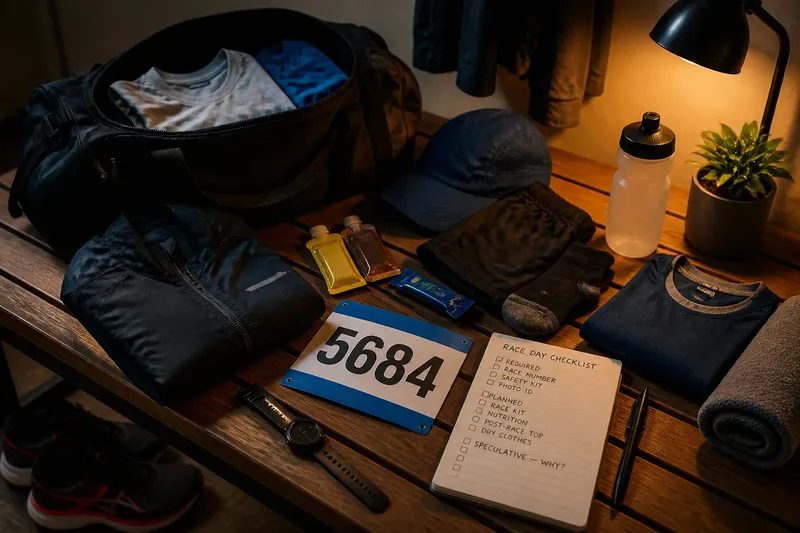
A race-day packing list is easier to use when every item has a clear job. Start with the organiser’s requirements and your actual plans, then add backups only for specific needs you can explain.
Build the list around confirmed details
Begin with the event information, not a mental tour of everything that could go wrong. Check the organiser’s instructions for required kit, check-in arrangements, clothing rules, food or drink provisions, and anything you must leave at a designated point. Put confirmed requirements at the top of your race-day packing list.
Next, write down your choices: what you will wear, what you will carry, how you will travel to the venue and what you expect to do after finishing. Each choice should translate into a practical packing need. If you are travelling in your running shoes, for example, spare shoes may not belong on the list unless the venue or journey gives them a clear purpose.
A packing list is a record of decisions, with a small allowance for ordinary uncertainty; it is not a catalogue of possible problems. Treat it like a tray for tools: keep what the job calls for and leave empty space rather than filling it automatically.
Separate required items from planned options
Group items by why they are on the list: required, planned or speculative. This makes it easier to spot essentials and question extras without dismissing useful personal choices.
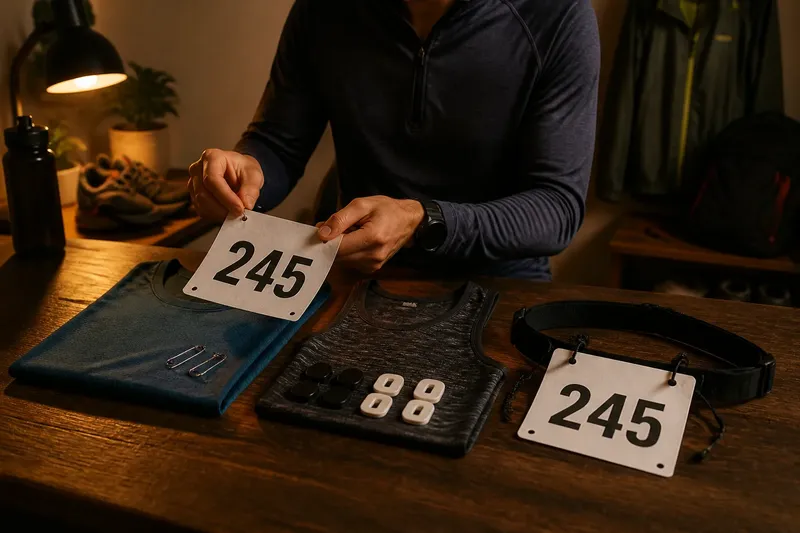
- Required: the organiser asks for it, or access to the event depends on it. This might include a race number or a specified item of safety kit.
- Planned: it supports a choice you have already made, such as a familiar top, a snack you intend to eat or a bag for dry clothes after the race.
- Speculative: it addresses a situation you have not planned for and cannot connect to a particular condition. A second complete outfit “just in case” often falls here.
Optional does not mean unnecessary. A cap can be a considered choice for a sunny course even if it is not required. Ask what condition or plan makes each optional item relevant.
Some items serve more than one purpose. A light layer might keep you comfortable while waiting and provide warmth after the finish. Keep it if those are real parts of your day, but do not use one vague possibility to justify several overlapping garments.
Give each speculative extra a clear purpose
For each speculative item, ask what specific situation it addresses, whether that situation fits the event information and your plans, and whether a simpler option could serve instead. If you cannot name a plausible use, leave it off unless new information changes the decision.
When an uncertainty is real, favour a familiar item that can serve more than one purpose. A compact layer may cover a cool wait and a chilly journey home without adding separate garments for each imagined condition.
Say you are taking a train to a local road race, the forecast describes changeable conditions, and you already plan to wear a light waterproof jacket before the start. You pack that jacket, your race clothing, a post-race top and the organiser’s required items; a second coat for an unspecified delay has no clear job. If the organiser later announces a long outdoor wait, you add a suitable layer or revise your clothing plan in response to that concrete detail.
The aim is not to carry as little as possible. It is to make each addition earn its place, so important items are easy to find among the things you need.
Review the list when the plan changes
A list should change when a real detail changes. A revised start arrangement, different transport, a new forecast or a change in what the event provides can all affect what belongs in your bag.
Before leaving, check each item and make the decision that follows from what you observe:
- Check the organiser’s latest required-kit instructions; if an item is listed, pack it, and if the instructions have changed, remove or replace the item that no longer fits.
- Check your clothing plan against the forecast; if the expected conditions call for another suitable layer, add one, and if your planned clothing already covers them, leave out a duplicate.
- Check what food and drink the event provides; if it does not provide something you plan to use, pack that familiar option, and if it does, leave out an unnecessary substitute.
- Check whether you plan to change after the finish; if you do, pack dry clothes, and if you do not, leave out a spare outfit without a clear use.
- Check your route and arrival arrangements; if you will need to carry belongings between places, use a suitable bag, and if you can leave items safely as instructed, avoid carrying them unnecessarily.
- Check whether two items serve the same purpose; if one familiar item covers both needs, choose it, and if they serve distinct planned uses, keep both.
- Check whether a backup addresses a known personal or event-related need; if it does, pack it in line with relevant guidance, and if it answers only an unspecified worry, leave it out for now.
Where an item depends on an event rule, manufacturer guidance or local requirement, follow that source rather than a general packing suggestion. For health or safety-sensitive needs, use relevant event guidance and seek advice from a qualified professional where appropriate.
Carry a backup only when it solves a real problem
A useful backup has a defined purpose, fits the event’s rules and your circumstances, and does not crowd out something more important. A spare item may be sensible if a particular personal need or travel arrangement makes it relevant; it is not useful simply because a problem is imaginable.
Consider the inconvenience of carrying it as well as the possible benefit. Extra bulk can make changing awkward, clutter a bag-drop or hide something you need to retrieve quickly. That does not make every spare a poor choice; it gives you another reason to distinguish a practical backup from a reflexive one.
For medical or other safety-sensitive backups, follow your clinician’s advice and the organiser’s instructions. Do not replace prescribed care or event safety guidance with a general packing tip.
What should a race-day packing list include?
Should I pack a spare change of clothes?
Pack one if you have a clear use, such as changing after the finish or travelling home in dry clothing. If you cannot identify when you would change, it may be an extra added by habit.
How do I decide whether to bring rain gear?
Check the forecast and the event’s arrangements, then consider what you plan to wear while waiting and travelling. Choose protection suited to those conditions rather than packing several garments for every possible version of the weather.
Should I bring food and drink?
Check what the event provides and what you personally plan to use. Pack familiar options that fit your plan, rather than carrying several alternatives without a reason to choose among them.
What belongs in an emergency backup?
Pack only a backup linked to a specific, plausible need, such as a personal requirement or an event arrangement that could affect your plan. Check the event rules and any relevant professional advice; if the item is appropriate, include it, and if it addresses only a vague worry, leave it out until concrete information changes the decision.
Use what you learn to refine the next list
After the event, note what you used, what you carried without a purpose and what you wished you had brought. Tie each change to a reason, so one unusual day does not turn into a permanent excuse to pack for every possible contingency.
A race-day packing list should reflect the event, the conditions and the choices you have made. Start with confirmed requirements, add planned items and purposeful backups, and revise only when something concrete changes. That keeps the list manageable while leaving room for your actual needs.